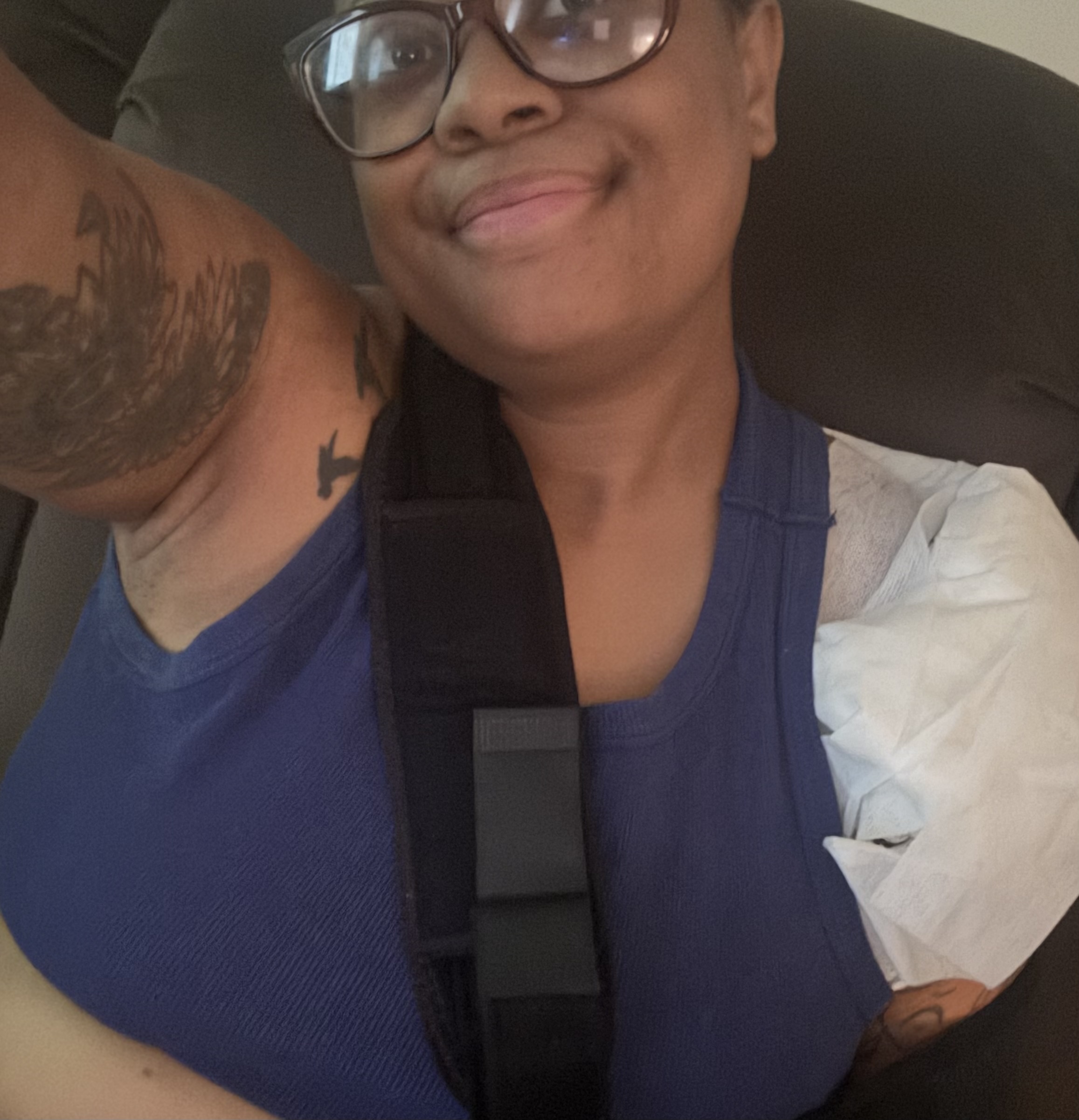
The Shoulder That Finally Said No!
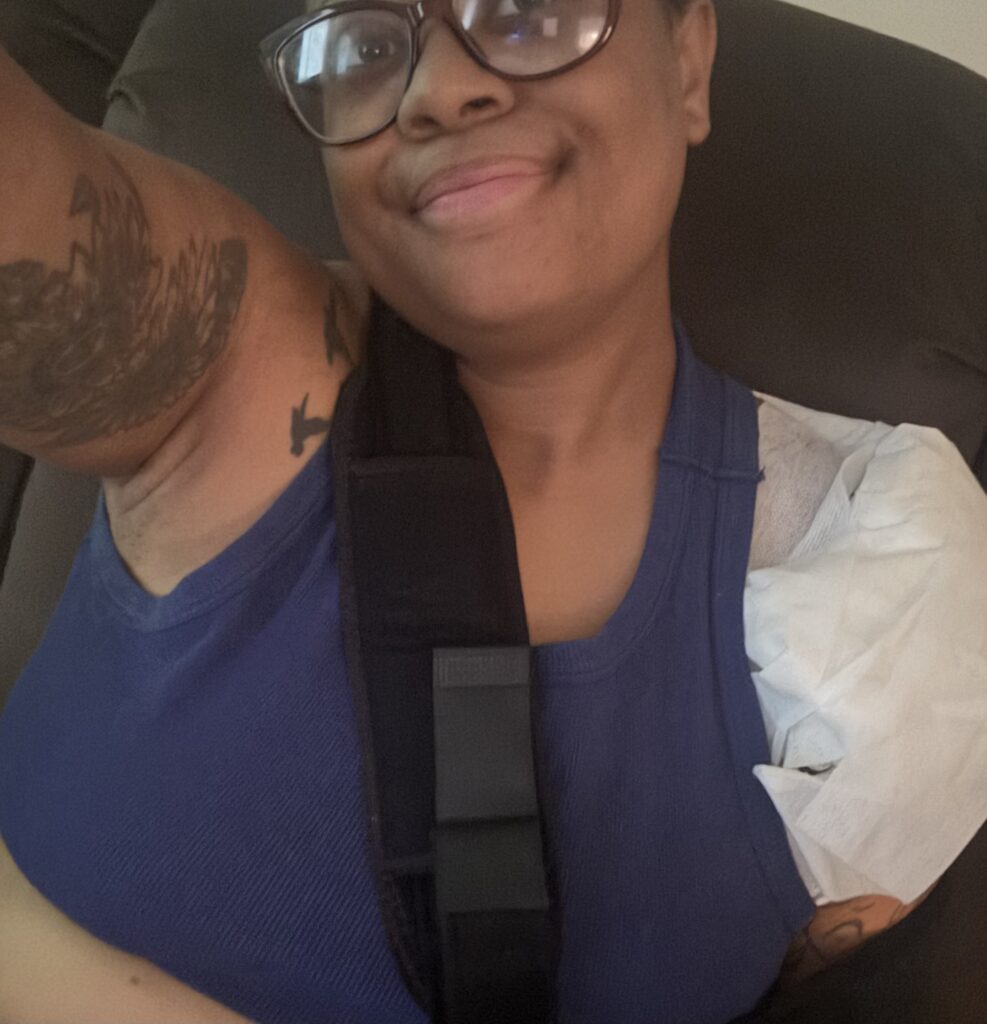
My shoulder never wanted attention.
For years it quietly did its job without asking for much in return. It carried backpacks, responsibilities, stress, and expectations. Whenever it complained, I convinced myself it wasn’t a big deal. A little soreness was normal. A little stiffness would go away.
At least, that’s what I told myself.
The truth is my shoulder had been trying to tell me something for a long time. I just wasn’t listening.
This is the story of what happened when it finally decided it had enough.
Chapter 1: The Perfect Employee
My shoulder never wanted attention.
It showed up every day and did exactly what was asked of it. It carried heavy bags, reached for things on high shelves, and supported me through every ordinary and extraordinary moment of life. No matter what I needed, it was there.
Whenever it felt tired, it stayed quiet. Whenever it felt strained, it pushed through. It believed that doing its job meant never complaining.
Over time, the shoulder became known for its reliability. If something needed to be carried, it carried it. If something needed to be endured, it endured it. It took pride in being dependable.
What it didn’t realize was that being dependable and being indestructible were not the same thing.
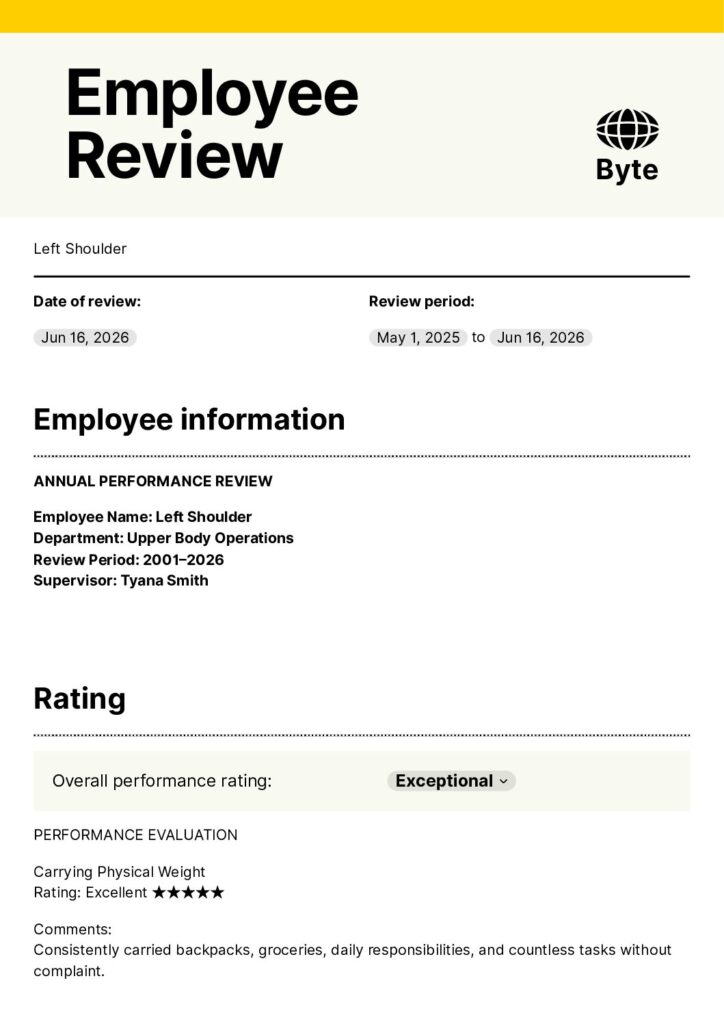
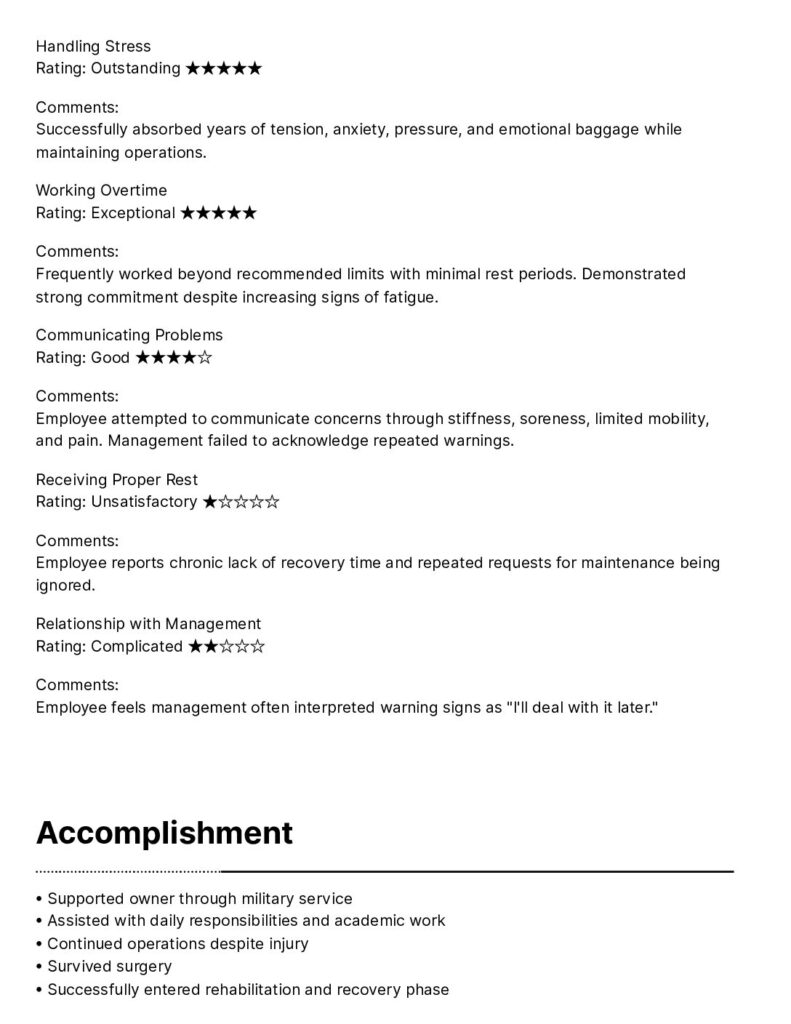
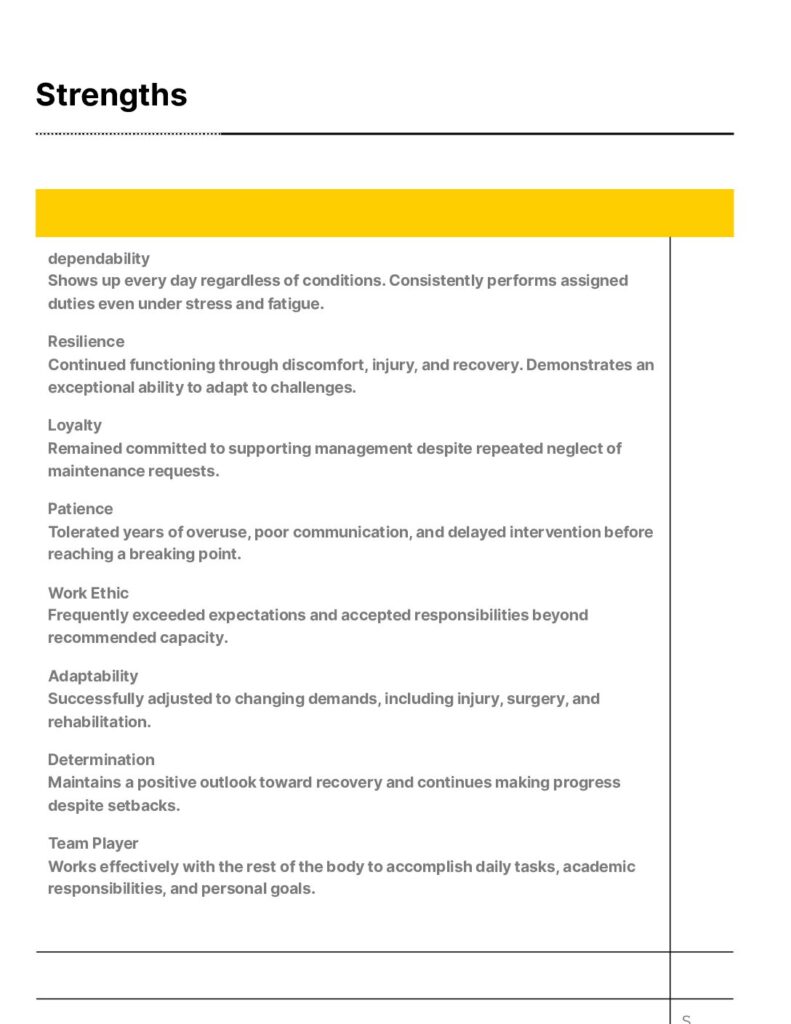
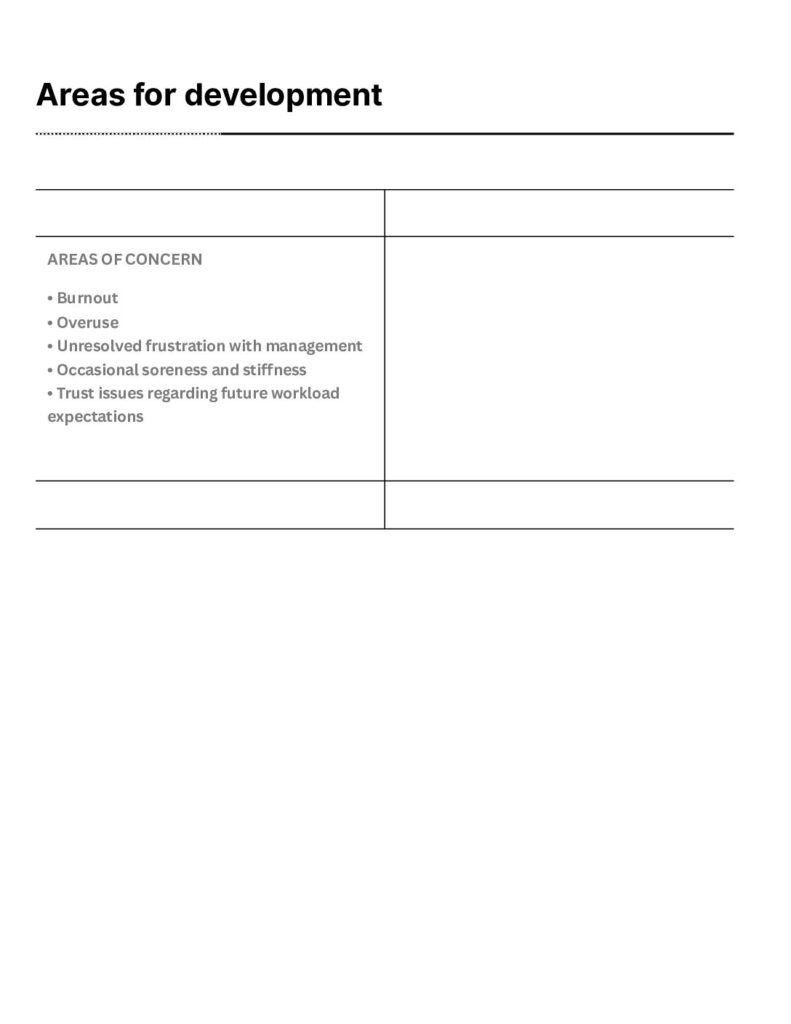
Looking back, the performance review tells the whole story. The shoulder had been working overtime for years. The problem wasn’t that it wasn’t doing its job. The problem was that nobody noticed how much it was sacrificing to keep doing it.
Chapter 2: A Message That Went Unheard
The shoulder tried to communicate.
At first the messages were subtle. A little stiffness in the morning. A little soreness after a long day. Small reminders that something wasn’t quite right.
Those messages were easy to ignore.
Then the messages became louder. Movements became uncomfortable. Certain tasks became harder. The shoulder kept speaking, but I kept translating its warnings into excuses.
I told myself it was temporary.
I told myself it wasn’t serious.
I told myself I’d deal with it later.
The shoulder heard every excuse.
By the time the shoulder decided to speak directly, years had already passed. It wasn’t angry. It wasn’t looking for sympathy. It simply wanted to be heard.
Chapter 3: Breaking Point
Every story has a moment when things can no longer continue as they have before.
For the shoulder, that moment didn’t arrive all at once.
It arrived through hundreds of small moments stacked on top of each other. Every ignored warning. Every delayed rest. Every time discomfort was treated like something to push through instead of something to understand.
Eventually, the shoulder ran out of ways to ask for help.
What looked like a sudden problem was actually the result of a long journey.
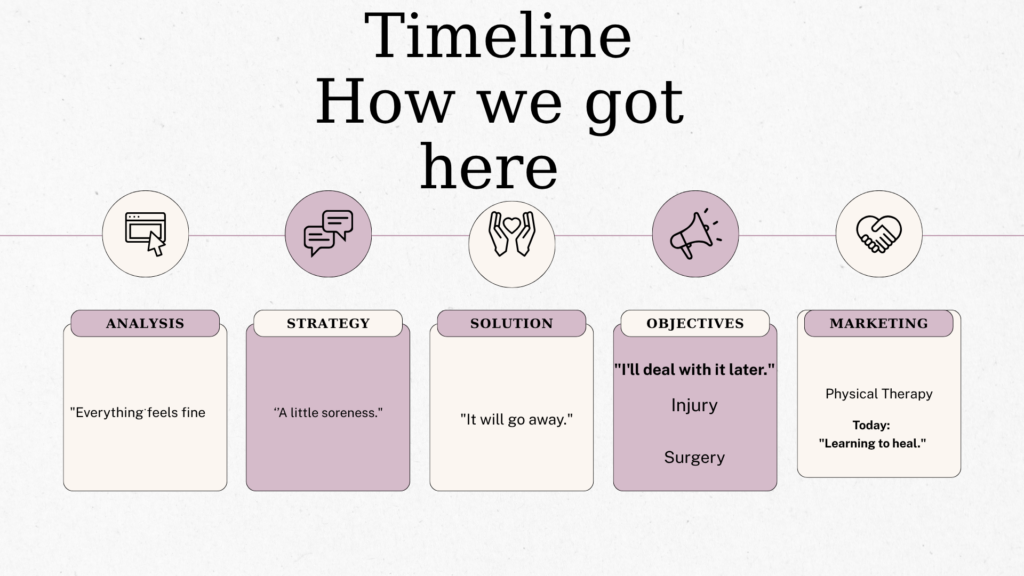
The timeline shows what the shoulder already knew. Nothing happened overnight. The breaking point was years in the making.
Chapter 4: Reconstruction
When the surgery was over, everyone assumed the hard part was finished.
The shoulder knew better.
Recovery isn’t a finish line. Recovery is a beginning.
The shoulder suddenly had a new job. Instead of carrying everything, it had to learn how to heal. Instead of proving its strength, it had to learn patience. Instead of moving forward at full speed, it had to accept slowing down.
For something that had spent years measuring its worth through endurance, this was the hardest challenge yet.
Physical therapy wasn’t dramatic. Most victories were small enough to go unnoticed by anyone else. A little more movement. A little less discomfort. A little more confidence.
But those small victories mattered.
The shoulder was rebuilding itself one day at a time.
Recovery gave the shoulder something it had never really had before: time to reflect.
For years it had been focused on surviving. Now it finally had a chance to look back on everything that had happened. Like many people at the end of a year, the shoulder decided to put together its own recap.
This is what 2026 looked like from its perspective.
Embed Spotify Wrapped Video Here:
The statistics were funny, but the lesson behind them was serious.
The shoulder’s most ignored warning sign was pain. Its most common activity was carrying more than it should have. Its biggest plot twist was surgery. But its greatest achievement wasn’t endurance.
It was recovery.
For the first time, progress was measured not by how much the shoulder could carry, but by how willing it was to heal.
Chapter 5: What the Shoulder Learned
The shoulder began this story believing that strength meant carrying everything.
It ended the story understanding something different.
Strength is not ignoring pain.
Strength is not pretending nothing is wrong.
Strength is not carrying every burden alone.
Real strength is knowing when something needs attention. Real strength is accepting help. Real strength is allowing yourself the time and space to heal.
The shoulder still carries things today. It always will.
But now it carries something new alongside those responsibilities: wisdom.
It finally understands that being strong does not mean being unbreakable.
Sometimes the strongest thing you can do is listen.
Epilogue
The shoulder never became exactly what it was before.
Neither did I.
For a long time, I viewed that as a loss. Now I see it differently.
Some stories end when something breaks.
This story began there.
The shoulder still has scars. It still remembers everything it carried. But it also carries a lesson that neither of us will forget.
No matter how strong something appears, it still deserves care.
And sometimes the things we ignore the longest are the things most desperately asking to be heard.
No responses yet